
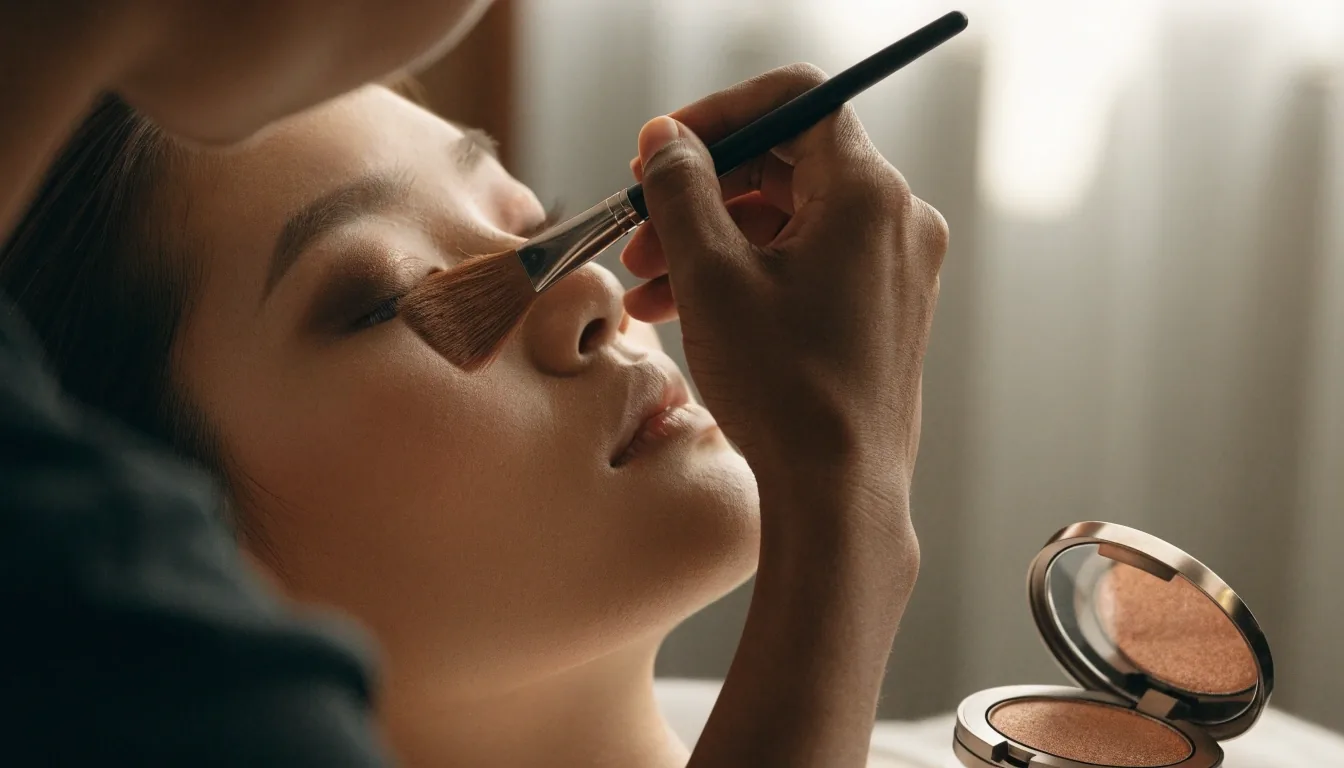
Singles & duos
Building Eye Looks with Singles and Duos
Palette fatigue is real. Most people finish a handful of shades and leave the rest untouched, which is why singles and duos have quietly held their place in the nars makeup eye lineup. A single lets you buy exactly the color you use. A duo pairs two shades that already work together.
Two pans, no guessing
Singles and duos fit a small makeup bag better than a twelve-pan palette ever will, and they sidestep the part of palette ownership nobody talks about: the shades you swatch once and never open again. This guide walks through how the two formats differ, what each finish actually does on the eye, and how to assemble a compact routine that still reads finished.
Everything below works with nars beauty products you may already own, and nothing here asks you to replace a collection you like. Read the format comparison if you are deciding what to buy, or jump to the step-by-step if you already have two shades in front of you and want a look out of them today.
Two shades, two brushes, and no palette required.
Why singles still make sense
A single eyeshadow is one color, chosen by you. That sounds limiting until you count how many shades in your current palette you actually hit. NARS Single Eyeshadow is available in multiple finishes and shade directions, so the range covers everyday neutrals and stronger colors without pushing you into a set.
The honest trade-off is cost per shade: a single almost never beats a palette on that math. Where it wins is cost per use. Buy two, use both, and the number looks different from a twelve-pan set where four shades carry the whole routine. If you already know your everyday crease color and the one lid shade you reach for, buying them alone is the cheaper habit over a year.
- You choose the finish and the shade direction, not a bundled set.
- Nothing expires unused, which is the quiet cost of any palette.
- Two singles stack flat in a small magnetic palette or a pouch.
What a duo solves
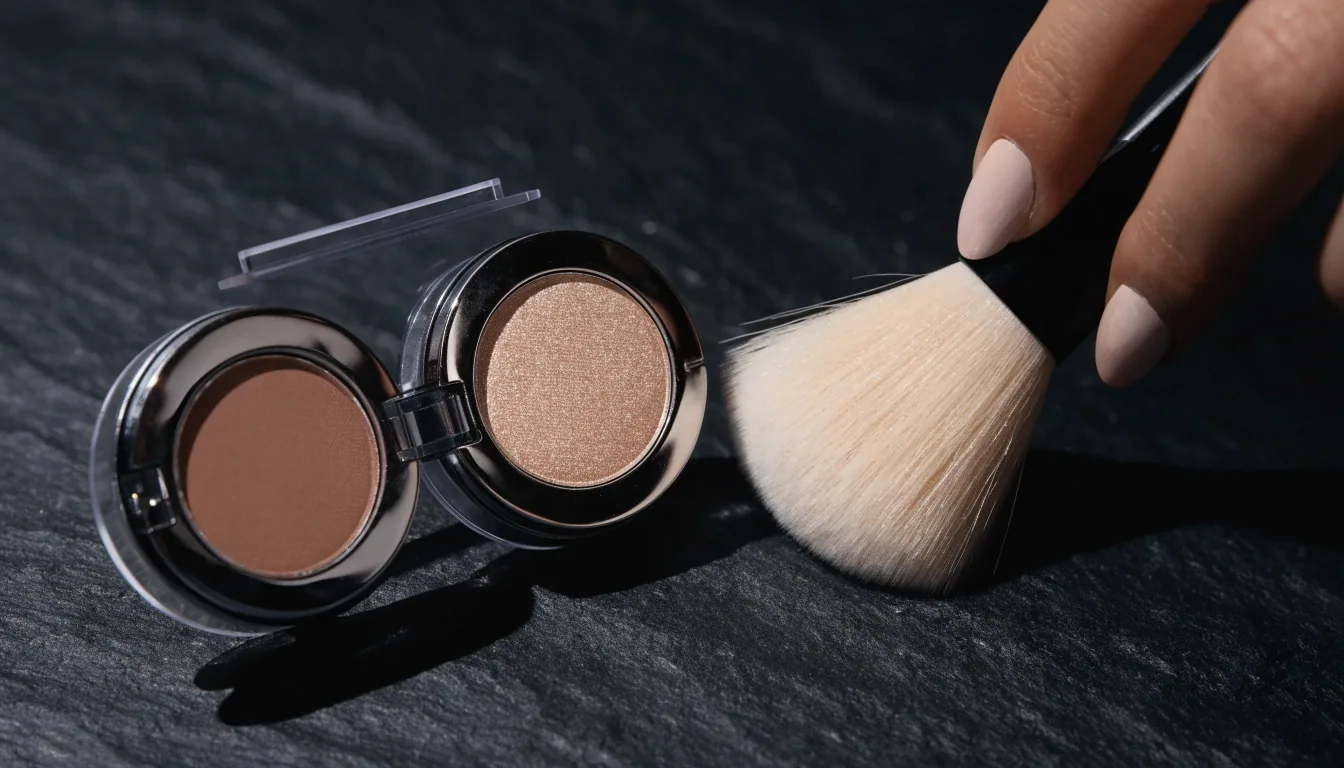
A Duo Eyeshadow pairs coordinated shades for a simple look with no guesswork. The value is in the pairing: someone already decided the two colors work together, which removes the step where most beginners stall.
That coordination matters more than it sounds. Deciding which two colors belong together is the part of eye makeup people get stuck on, and a duo answers it before you open the compact. Duos lean into the brand's polished, edited aesthetic and compact eye makeup rather than large palettes, which is exactly what a small routine needs.
Duo advantage
Two shades that already coordinate, so there is nothing to match.
Single advantage
Exact color control and no waste on shades you will not use.
Finishes and how they behave
Finish is what changes a shade's job, not its color name. Read the three finishes below as a placement guide: each one behaves differently depending on where on the eye it lands.
- Matte
- Absorbs light and works well in the crease, where you want depth rather than reflection. A matte close to your skin tone also makes the cleanest base shade for any look.
- Shimmer
- Reflects light and sits better on the lid. Pressed rather than swept on, it stays where you place it instead of traveling into the crease.
- Satin
- Lands between the two and is the easiest to wear alone. If you only own one shadow, a satin is the shade that works with the least effort.
If you are building from scratch, one matte and one shimmer covers most everyday looks. Add a satin later if you want a shade that needs no second product to finish the eye.
A two-shade look, step by step
Two shades, two brushes, and no palette required. This is the version to learn first, because every heavier look is this structure with more layers added.
-
1
Lid first, with the lighter shade
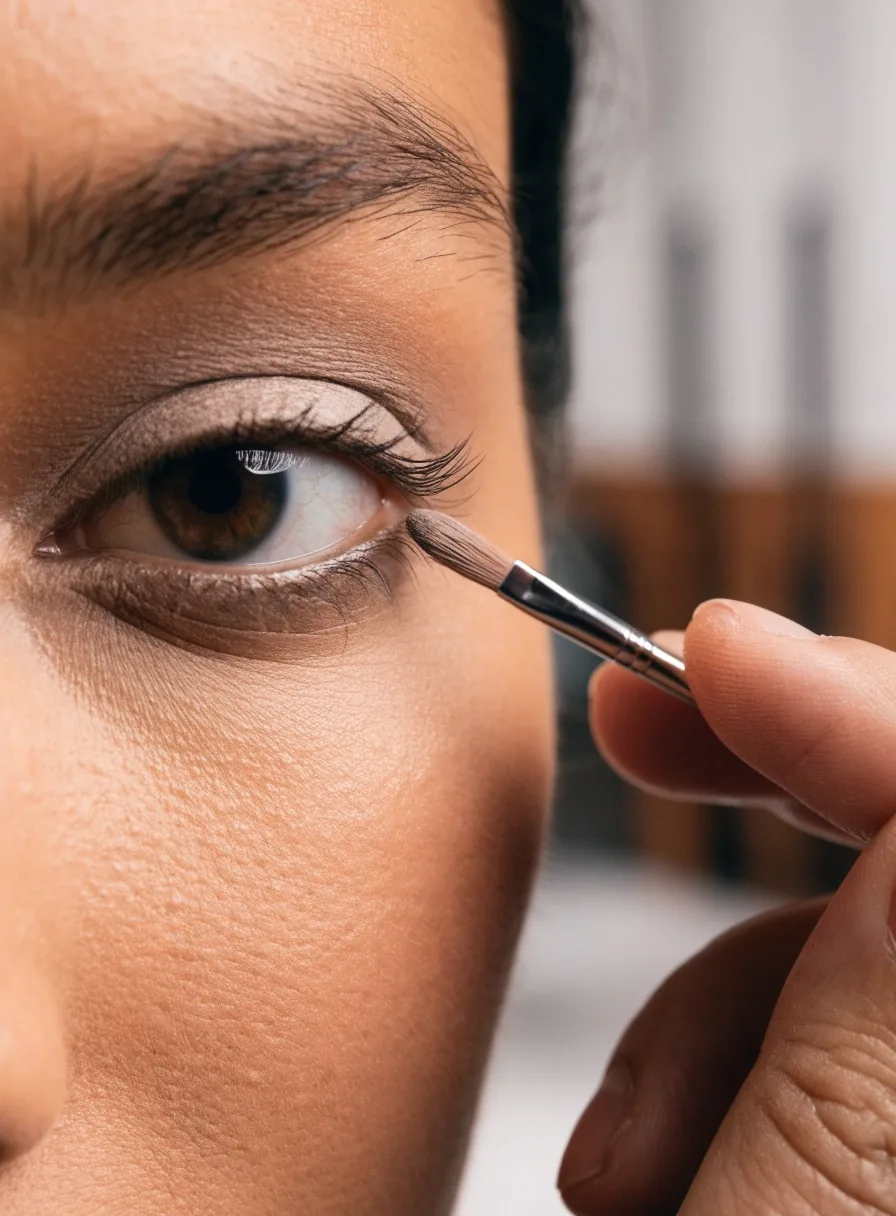
Place the lighter or shimmer shade across the lid with a flat brush. Pat it on rather than dragging, and keep the edge soft toward the crease.
-
2
Depth in the crease, with the deeper matte
Take the deeper matte shade into the crease with a fluffier brush and blend upward in small circles. Small circles, light pressure, repeated passes.
-
3
Definition along the lower lash line
Add the deeper shade along the lower lash line if you want more definition. A thin pass with the edge of the brush is enough for daytime.
Building a three-shade look
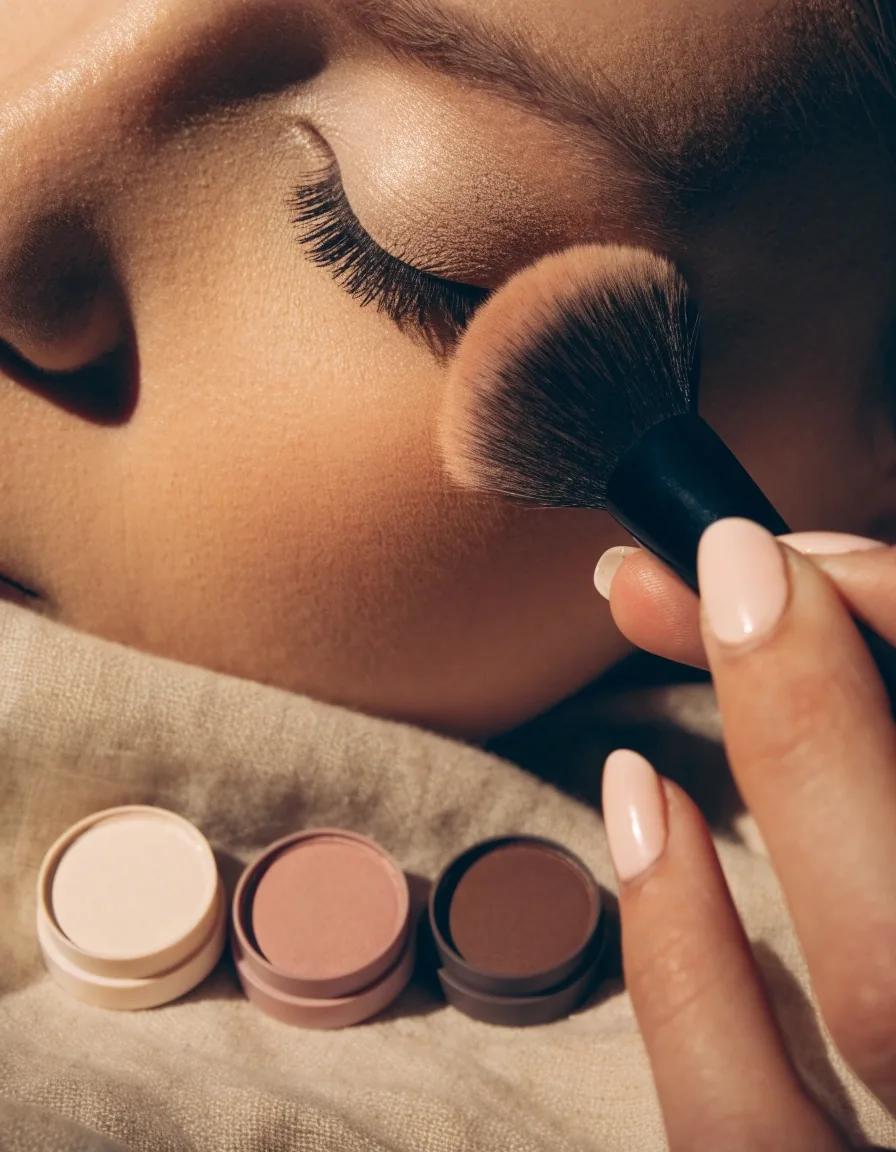
Add a matte shade close to your skin tone as a base over the whole lid before anything else. That base makes blending easier and helps the other shades last.
From there, the mid-tone goes on the lid and the deepest shade stays in the crease and outer corner. This is the structure most tutorials assume you already know.
Choosing colors for your eye color
Contrast does the work here. None of this is a rule, but it is a useful starting filter when a range offers thirty options.
- Brown eyes Tend to pick up bronze, olive, and plum. These deepen the natural warmth already in the iris.
- Blue eyes Respond to warm copper and peach tones, which sit opposite blue on the color wheel and make it read brighter.
- Green eyes Often look brighter next to mauve and reddish-brown, which pull out the green rather than covering it.
- Hazel eyes Shift with the light, so both warm bronze and cooler mauve tend to flatter depending on which tone you want to bring forward.
Use the list as a filter, not a verdict. The shade you actually reach for every morning is the right one for your routine, whatever the color wheel says.
Daytime versus evening
Daytime looks usually need one or two shades and a lighter hand. Evening looks add depth in the crease and definition along the lash line, and often a shimmer on the center of the lid.
You do not need different products for both; you need a heavier application and one extra shade. That is the whole difference between the two looks on this page.
Daytime
One or two shades, light pressure, blended edges. Satin or a light shimmer on the lid works alone.
Evening
Same two shades, built deeper in the crease, plus definition along the lash line and shimmer at the center of the lid.
Texture, fallout, and blending
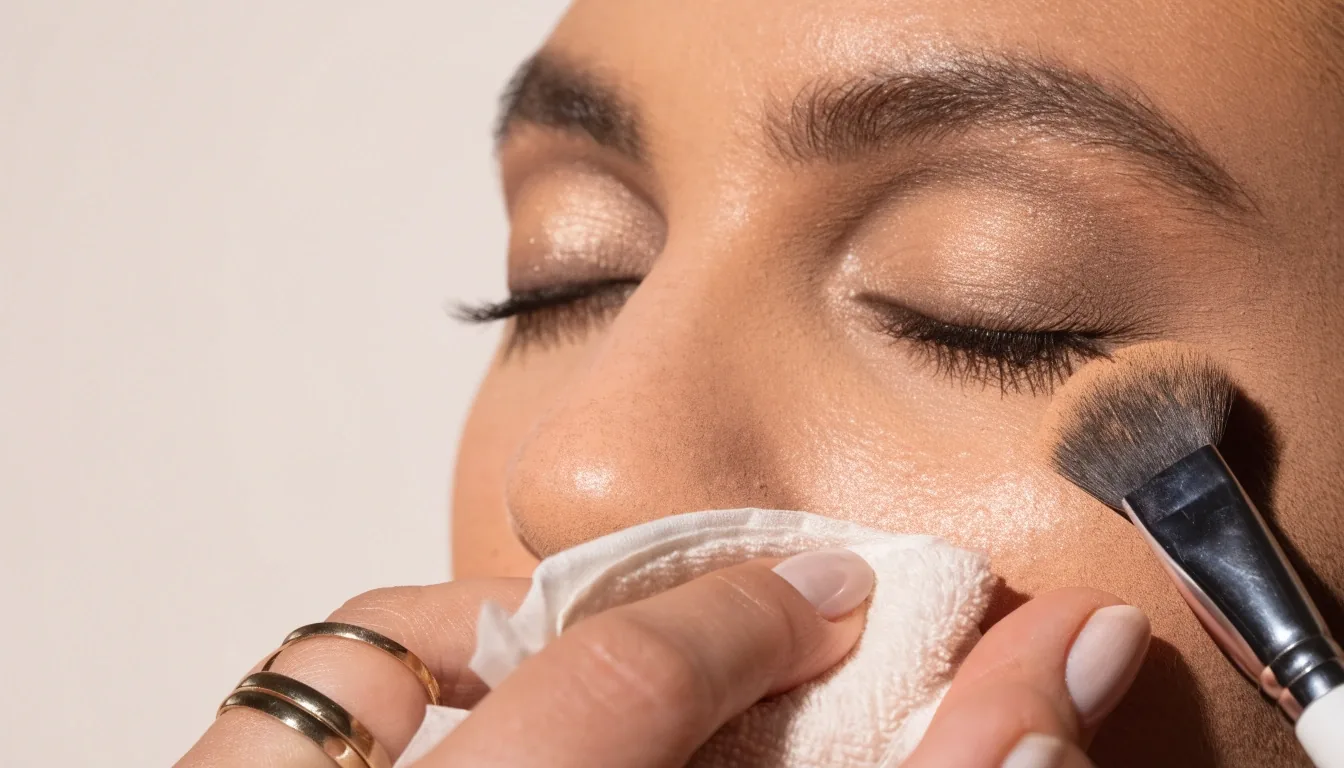
Powder eyeshadow can drop particles onto the cheek during application. Do your eyes before your base if that bothers you, or hold a tissue under the eye while you work.
If a shade looks patchy, the usual cause is applying too much at once rather than building in thin layers. Tap the brush off before it touches the lid, and keep the layers thin enough that each one still blends.
Singles versus duos versus palettes
Each format answers a different question. Read across the rows to see which one matches how you actually use eye makeup, not how you wish you did.
| Format | What it gives you | Where it costs you |
|---|---|---|
| Singles | Control and no waste. You buy the exact shade and finish you use. | Higher cost per shade than a set, and you assemble the colors yourself. |
| Duos | A coordinated pair and a faster decision, in a compact case. | Less range per purchase, and the pairing is fixed for you. |
| Palettes | Range, and usually a better price per shade across the set. | Colors you may not touch, and a case that takes up bag space. |
If you travel with makeup, singles and duos pack flatter and let you swap colors between trips. A palette is one object to carry, but it is also the one object you cannot slim down.
Storage and travel
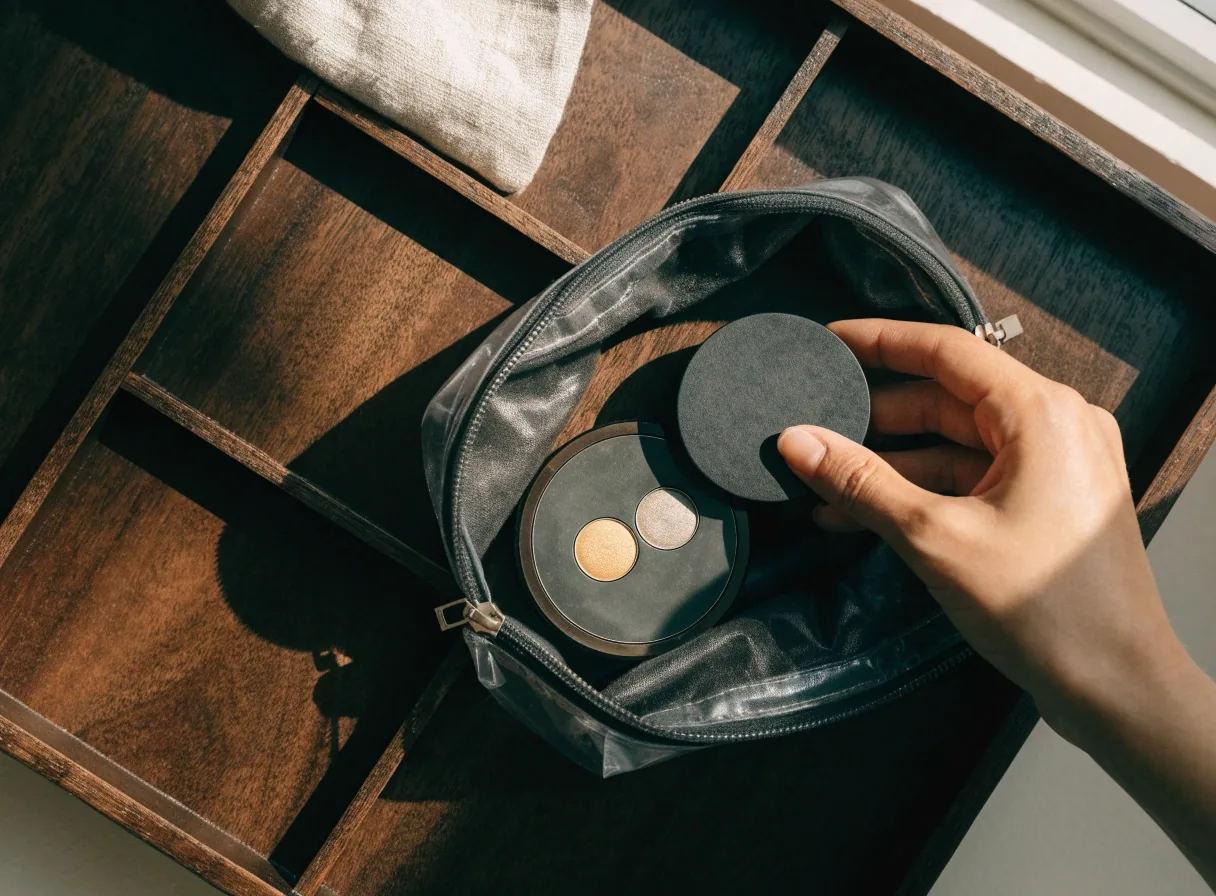
Loose singles are easy to lose, so a small magnetic palette or a zippered pouch keeps them together. Duos are self-contained by design, which makes them the easier travel option.
Either way, keep powder products away from anything damp in your bag, since moisture is what turns a pressed powder hard and unusable. A pouch that separates powder from liquids solves more long-term problems than any extra brush does.
Common mistakes
Each of these is a technique fix, not a product problem. None of them require buying anything new.
-
Shimmer in the crease
It reflects light and makes the eye look flat. Keep shimmer on the lid and let a matte carry the crease.
-
One brush for every shade
It muddies the colors. Two brushes, one for light shades and one for deep, is enough to keep them clean.
-
Skipping a base shade
Then wondering why blending takes so long. A skin-tone matte base first makes everything after it easier.
What to buy first
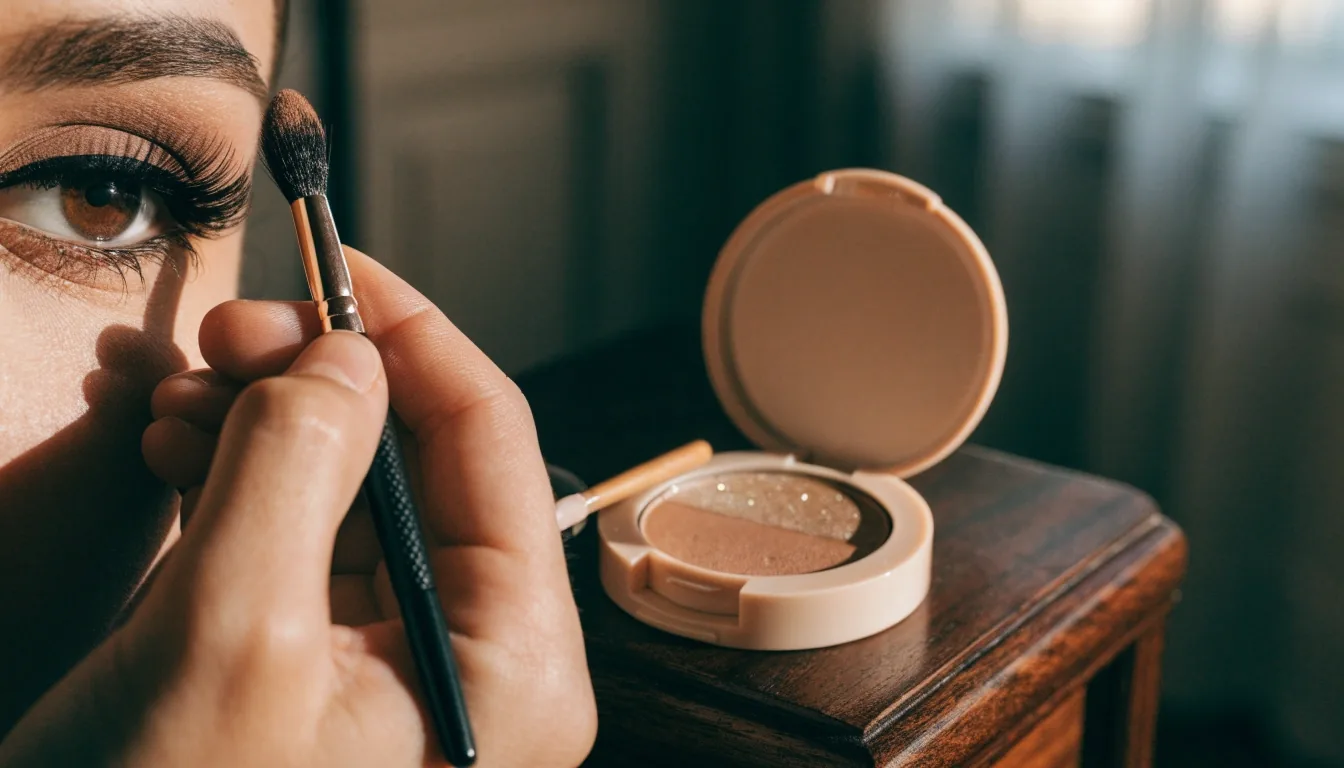
If you are starting out, choose a duo in neutral tones and one single in a finish you do not already own. That combination covers a basic daytime look and gives you room to build.
Add a deeper matte single once you know which crease color you reach for most. Buying the crease shade after you have used it for a few weeks is more useful than guessing at it up front.
Questions readers ask
The four questions that come up most when someone is deciding between formats or troubleshooting a look.
Are single eyeshadows better than palettes?
Not universally. Singles avoid waste if you use only a few colors, while palettes offer more range and usually a lower cost per shade.
What is a duo eyeshadow for?
It pairs two coordinated shades so you can build a simple look without deciding which colors work together.
Which finish should a beginner start with?
A satin or a light shimmer for the lid and a matte for the crease. That pair covers most everyday looks.
Why does my eyeshadow look patchy?
Usually too much product applied at once. Build in thin layers and use a separate brush for each shade.
Where to continue reading
- Radiant Creamy vs Soft Matte Concealer How the two concealer finishes differ and which one suits which coverage need.
- The Multiple in Practice Where a cream multi-stick fits in a compact routine and how to layer it over powder.
- How We Research and Update Guides Our method for checking product details and keeping these guides current.