Afterglow lip care, compared
Afterglow Lip Balm and Lip Shine
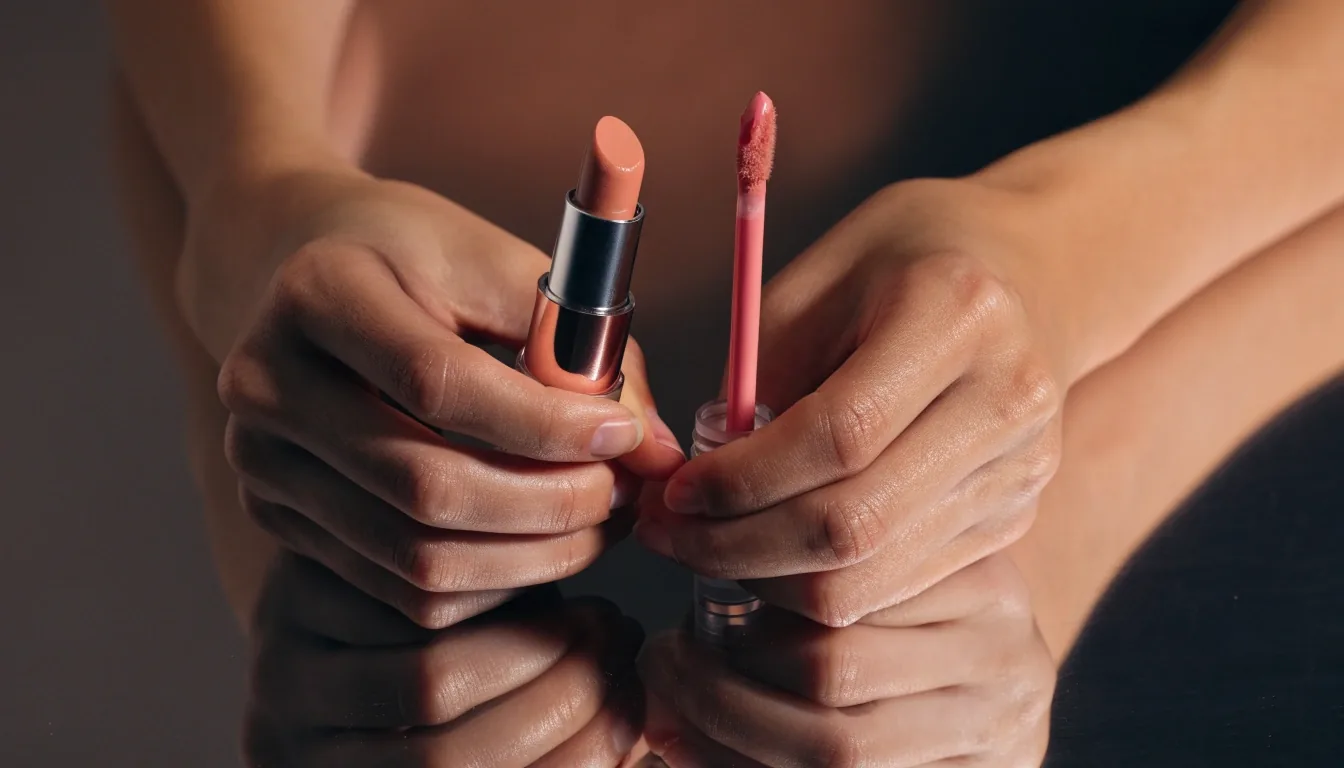
These two products sit next to each other on the shelf and get confused constantly. One gives a hint of tint plus hydration, the other gives mirror-like gloss. Here is how to tell which one belongs in your bag.
Read this first
Tint or shine, and nothing in between
Neither of these lip products is full coverage, and that is the point. Reading them as a tint-versus-reflection decision saves a lot of second-guessing at the counter.
Tint
Color on the lip. Afterglow Lip Balm leans this way — a wash you can build slightly, never a painted edge.
Shine
Reflection on the lip. Afterglow Lip Shine leans this way — light bouncing back, with less color of its own.
Comfort
How the texture feels through a long day. Balm textures are built for it; gloss textures trade some of it for finish.
If you already know which of the two effects you actually want, the comparison answers itself faster than any swatch photo will. Everything below is detail on that one choice — how each product behaves, where they stack, and what to keep in a bag.
The short answer
Pick the balm for comfort, the shine for reflection
Want comfort and a wash of color you can apply without a mirror? Take the balm. The tint is forgiving, the application is hard to get wrong, and reapplication through the day costs you nothing.
Want visible shine and a glossier finish? Take the shine. It is the piece that makes a bare face look finished, and it reads most clearly on top of another lip step.
Want both effects? Balm goes on first, shine goes on top. That order is the whole layering method, and the section further down covers how to keep the gloss from sliding.
What the balm does
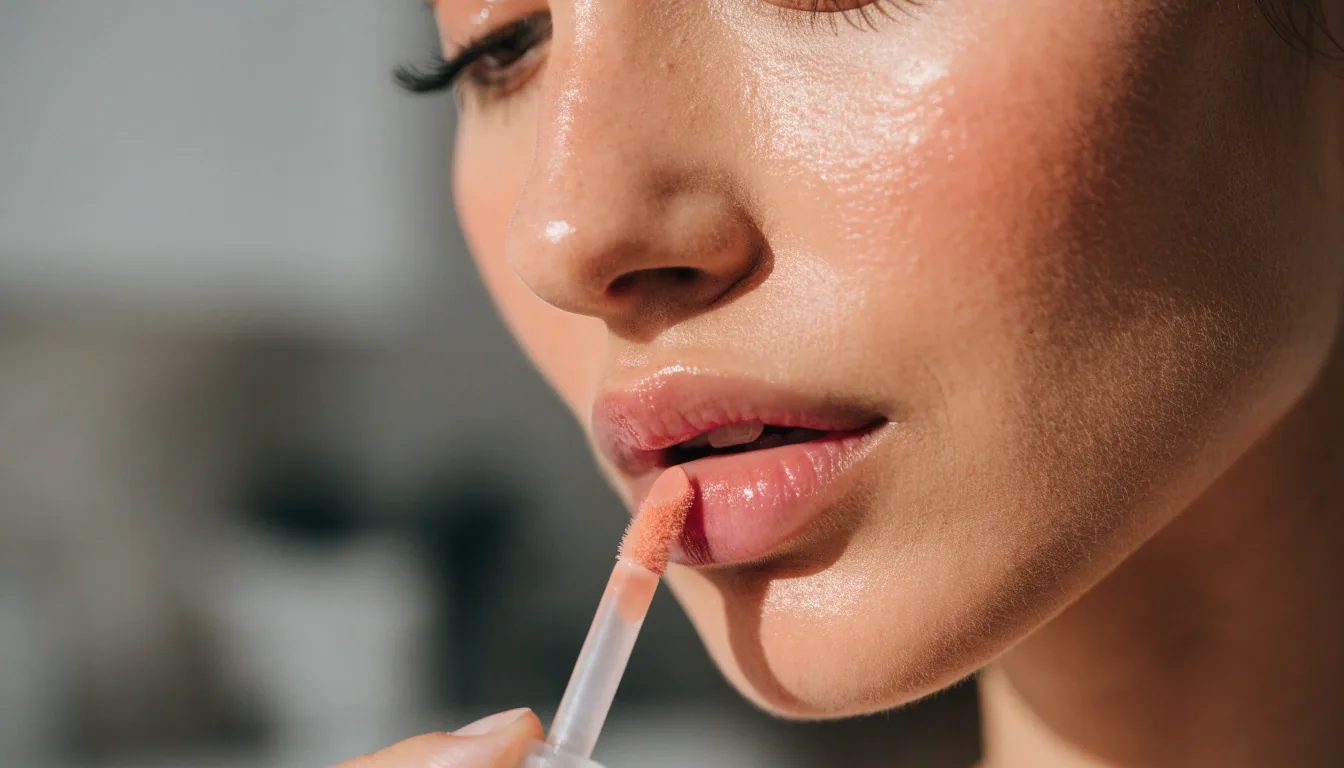
Afterglow Lip Balm adds color and hydration with a hint of tint rather than full coverage. It sits in the brand's softer-lip category, and it fits the current interest in balm textures over heavier lip formulas.
Practically speaking, it is the product you can reapply through the day without checking a mirror. That single habit is why it works well as a first step into prestige lip color — the result is hard to overdo, and a slightly uneven application still reads as intentional.
Coverage
A hint of tint. Expect your natural lip to show through, with color building only slightly if you go over it twice.
Finish
Soft and comfortable rather than wet. It reads as healthy lips, not as a lacquered surface.
Application
Direct from the bullet, no brush and no mirror required. A quick press of the lips evens it out.
Best moment
All day, every day — including the commute, the desk, and the walk back. It is the low-attention option.
What the shine does
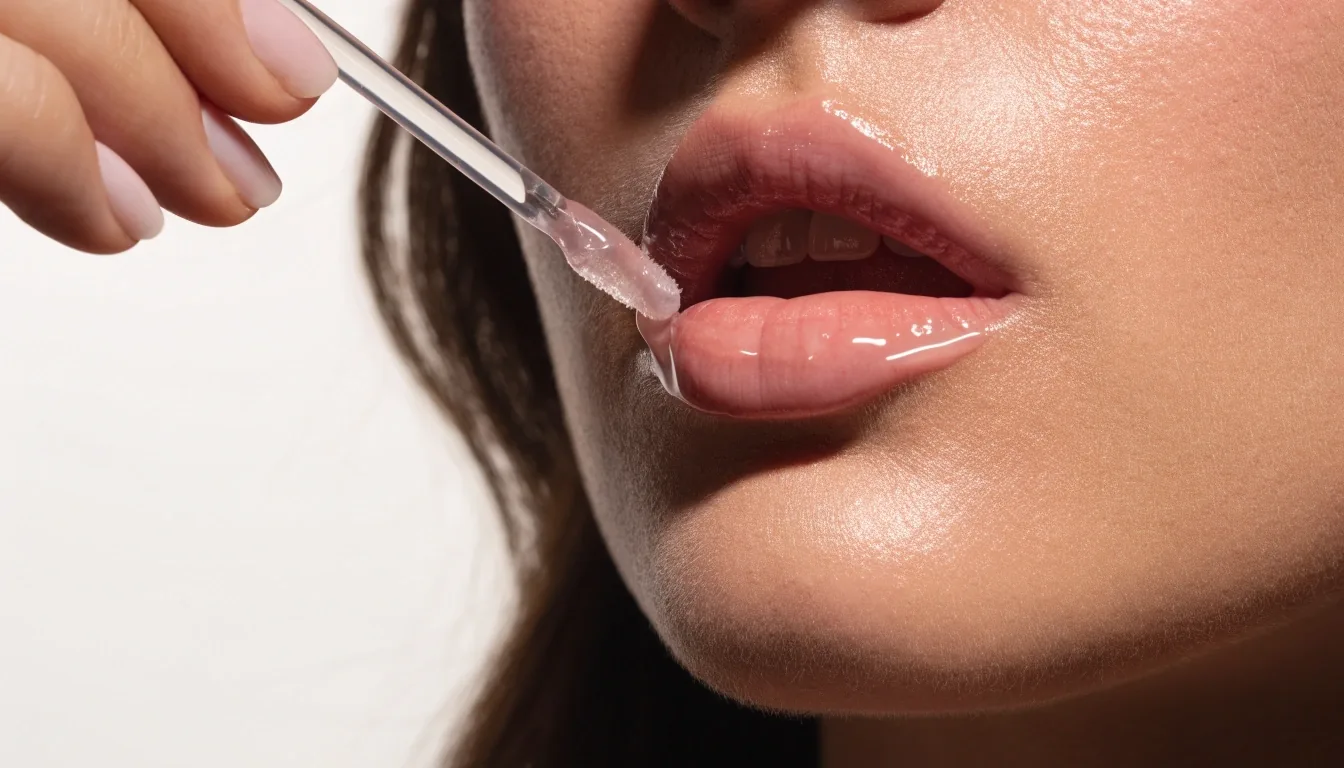
Afterglow Lip Shine delivers a mirror-like finish and belongs to the brand's glossy lip family. In NARS tutorial content it is used to layer over other lip steps rather than worn alone. That layering habit matters: gloss on bare lips behaves differently from gloss over a balm or a lip color, and it wears away faster.
On bare lips
Shine reads immediately, then fades sooner. There is nothing underneath holding the finish in place.
Over a balm or color
The gloss sits on a prepared surface, so the reflection stays even and the layer lasts longer between touch-ups.
Hydration and how it feels
Balm textures are built for comfort, and that is their main selling point. Gloss textures are built for finish, and some feel tackier by design because that is what keeps them in place. Neither texture is better in the abstract — they are answering different questions.
Balm texture
Soft, cushiony, and nearly weightless on the lip. It moves with you and disappears gradually instead of cracking at the edges. This is the texture that rewards being applied in a hurry.
Gloss texture
Thicker and slightly tacky, which is exactly what holds the reflection in place and keeps it from migrating. It rewards a more deliberate hand — press rather than sweep, and give it a second to settle.
If your lips are dry or the weather has turned cold, the balm is the friendlier daily option. The shine works better over a balm than directly on dry lips, because flaking texture shows through a reflective finish far more than it does through a soft one.
How to layer them
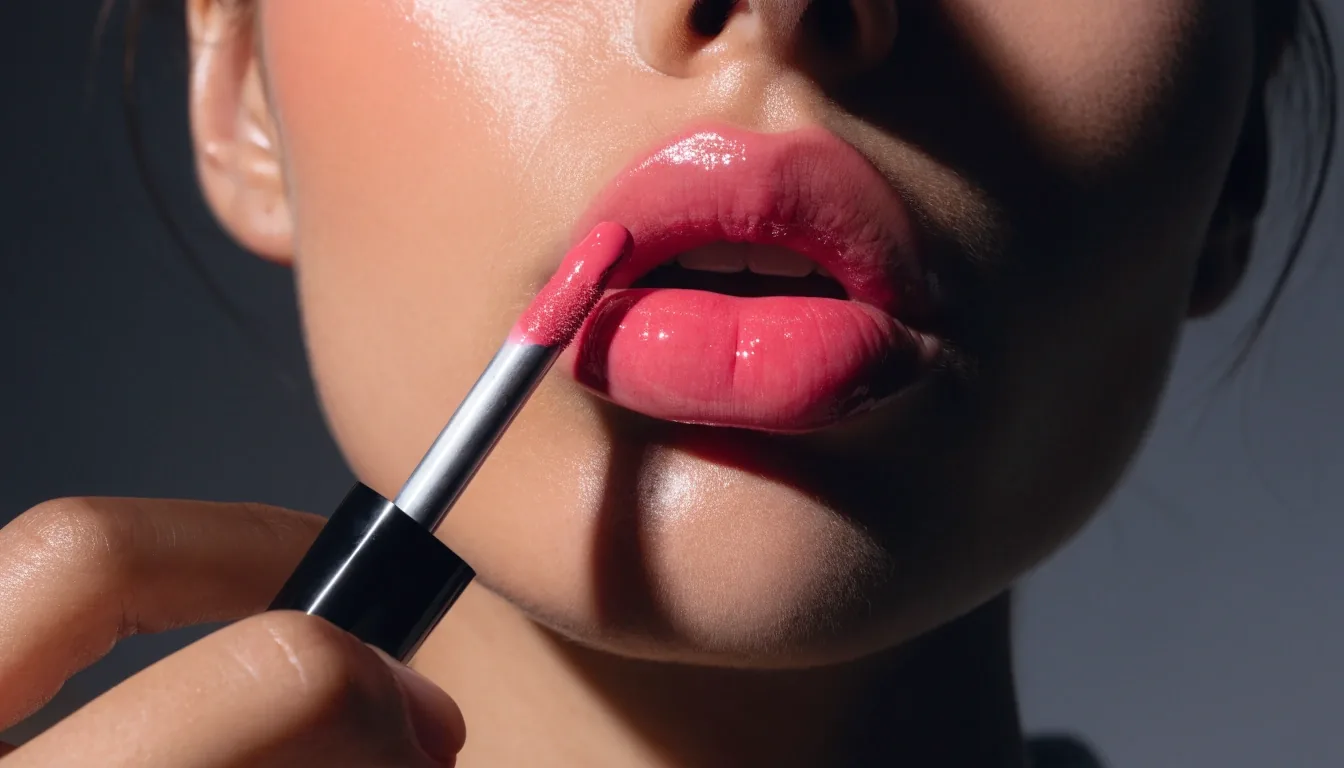
Two products, three moves. The order is the part people get wrong, and the press instead of the sweep is the part that decides whether the gloss stays inside your lip line.
-
1
Balm first, then wait
Apply the balm and let it settle for a moment. Gloss pressed onto a freshly applied layer tends to slide, and that is how it ends up outside the lip line.
-
2
Shine at the centre of the lower lip
Add the shine to the centre of the lower lip rather than across the whole mouth. That is where light actually hits, so you get the full reflective effect with less product to manage.
-
3
Press, do not sweep
Press your lips together to spread the gloss across both. Sweeping drags it sideways and past the lip line. Later in the day, reapply the shine only — the balm underneath is still doing its job.
Choosing a tint direction
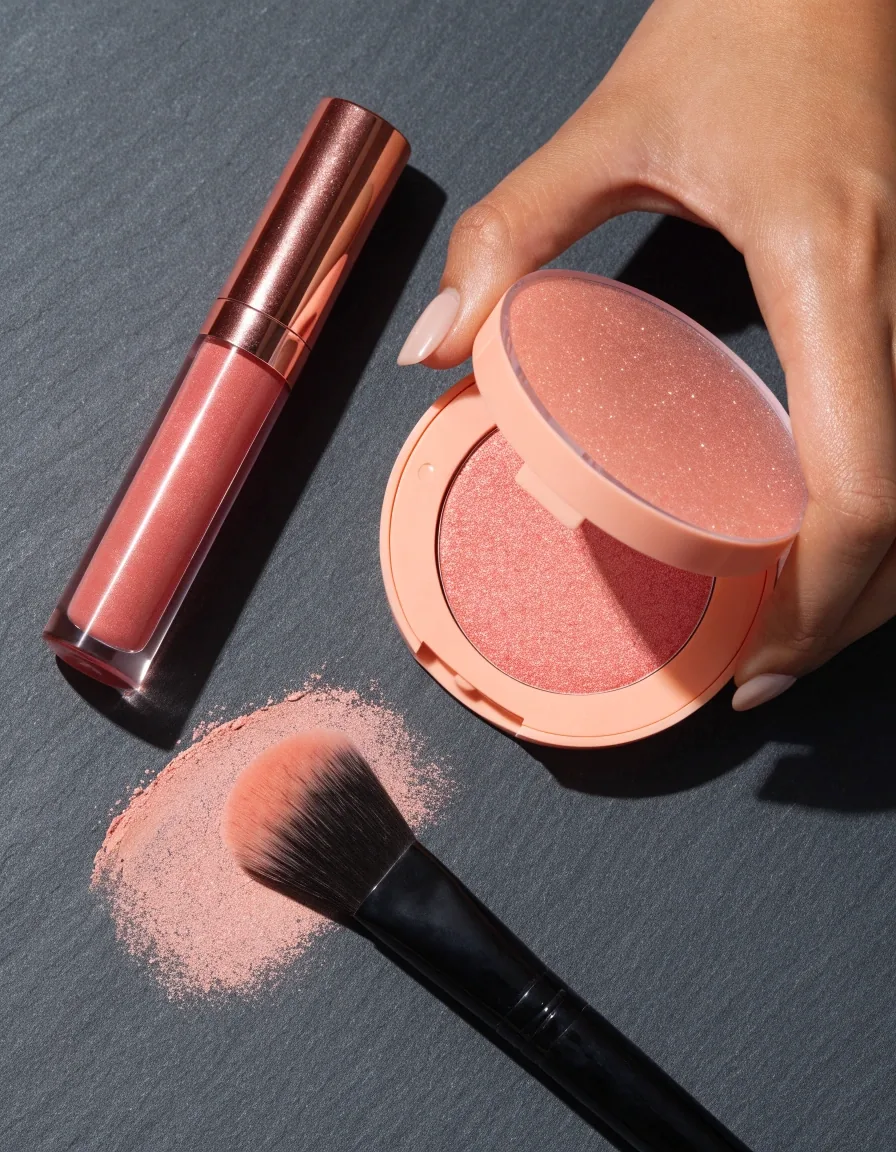
Balms in the softer-lip category tend to run toward wearable, everyday colors rather than statement shades. If you already know which cheek shades suit you, the same direction usually works on lips — which makes this an easier decision than picking a lip color cold.
Peachy-pink tones keep the face coherent: cheek and lip sit in the same family and the whole look reads as one decision. A deeper lip against a soft cheek does the opposite and creates contrast, which reads more deliberate and more evening-facing. Both are legitimate; they just read differently, and knowing which one you want is more useful than collecting swatches.
If you are unsure, start with the direction you already wear on cheeks. It is the fastest way to a lip color that looks like it belongs on your face rather than borrowed from someone else's.
Cheek and lip in one family
Gloss and minimal makeup
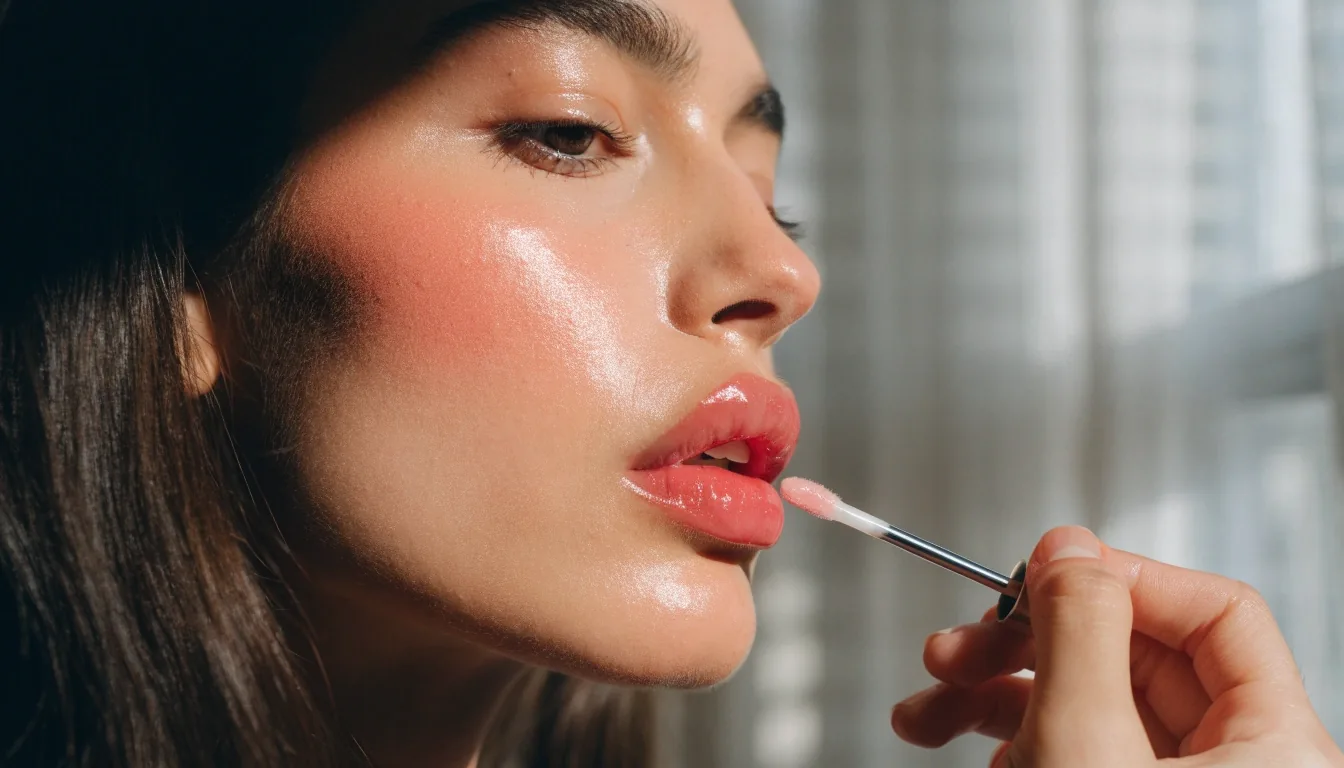
High-shine lips have returned to popularity alongside pared-back base makeup. The reason is simple: gloss adds an obvious finishing step to a face that otherwise has very little on it. If your routine is a tinted base, a cheek color, and nothing else, a gloss does more visible work than a full lip color would.
It is also the cheapest way to change a look you already like without rebuilding it. A tinted base and a cheek color read one way with a soft balm and noticeably another with a reflective finish on top — same face, different level of polish.
Wear time and reapplying
The two products age on the lip at different speeds, and that difference is most of why people end up carrying both.
The balm fades gradually
It wears away without a visible edge, so a top-up never looks like a repair. You can reapply it in a lift, in a queue, or mid-conversation without a mirror and nothing will look off.
The shine wears faster
Particularly after eating or drinking. Gloss thins unevenly — you lose the centre of the lip first and keep the edges, which is the opposite of what looks natural.
Wipe the centre before adding more
Reapplying straight over a worn layer is what makes gloss look patchy. Wipe the centre of the lip lightly first, then press on the new layer. That one step keeps the finish clean through the day and stops product building up where it is most visible.
Common mistakes
Each of these is an expectation problem rather than a formula problem, which is good news — they are all fixable before you spend anything.
Gloss on dry lips
Applying gloss to dry, flaky lips makes texture more visible rather than less, because the finish reflects every ridge. Prepare the lip first, or choose the balm on those days.
Shine over matte
Layering shine over a matte lip color and expecting it to stay put. A matte base gives the gloss nothing to grip, so it moves. Put the shine over a balm instead.
Tint, not coverage
Buying a tint expecting full coverage. Neither of these products provides it, and no amount of layering will turn a hint of color into a painted lip.
What to carry in a bag
If you carry one lip product, carry the balm. It handles hydration, a hint of color, and reapplication without a mirror — three jobs in one tube. If you carry two, add the shine for evenings or for days when you want the glossy finish. That pair covers most situations without a full lip wardrobe.
A two-product kit
Afterglow Lip Balm — the everyday carry
AlwaysAfterglow Lip Shine — the finish layer
EveningsHow they fit a starter routine
For a first prestige lip purchase, the balm is the easier entry point. The tint is forgiving and the application is hard to get wrong, so the product teaches you what you like before you commit to a direction.
Add the shine once you know you like the finish direction. From there, the rest of the lip category makes more sense, because you have a reference for how you like your lips to look — softer or more reflective, everyday or evening.
If you are still deciding on the tint itself, the cheek shades you already wear are the most reliable guide. Lips and cheeks reading as one family is the look most people are actually after, and it is the easiest one to repeat.
Questions we get most
Short answers to the four things readers ask about these two lip products. If your question is about the tint itself rather than the finish, the shade guide is the better place to look.
Which one gives more color?
+
Afterglow Lip Balm. It provides a hint of tint, while Afterglow Lip Shine focuses on a mirror-like finish with less color of its own.
Can I wear the shine on its own?
+
Yes, though it is often layered over other lip steps. On bare lips it tends to wear away faster and the finish thins unevenly, so most people get a better result with a balm underneath.
Which is better for dry lips?
+
The balm. Gloss works better over a balm than applied directly to dry or flaky lips, where a reflective finish tends to highlight texture instead of smoothing it.
How do I reapply gloss without it looking uneven?
+
Wipe the centre of the lip lightly before adding more, then press your lips together instead of sweeping. That keeps the new layer even and stops product building up in the middle.
Still deciding on a tint direction?
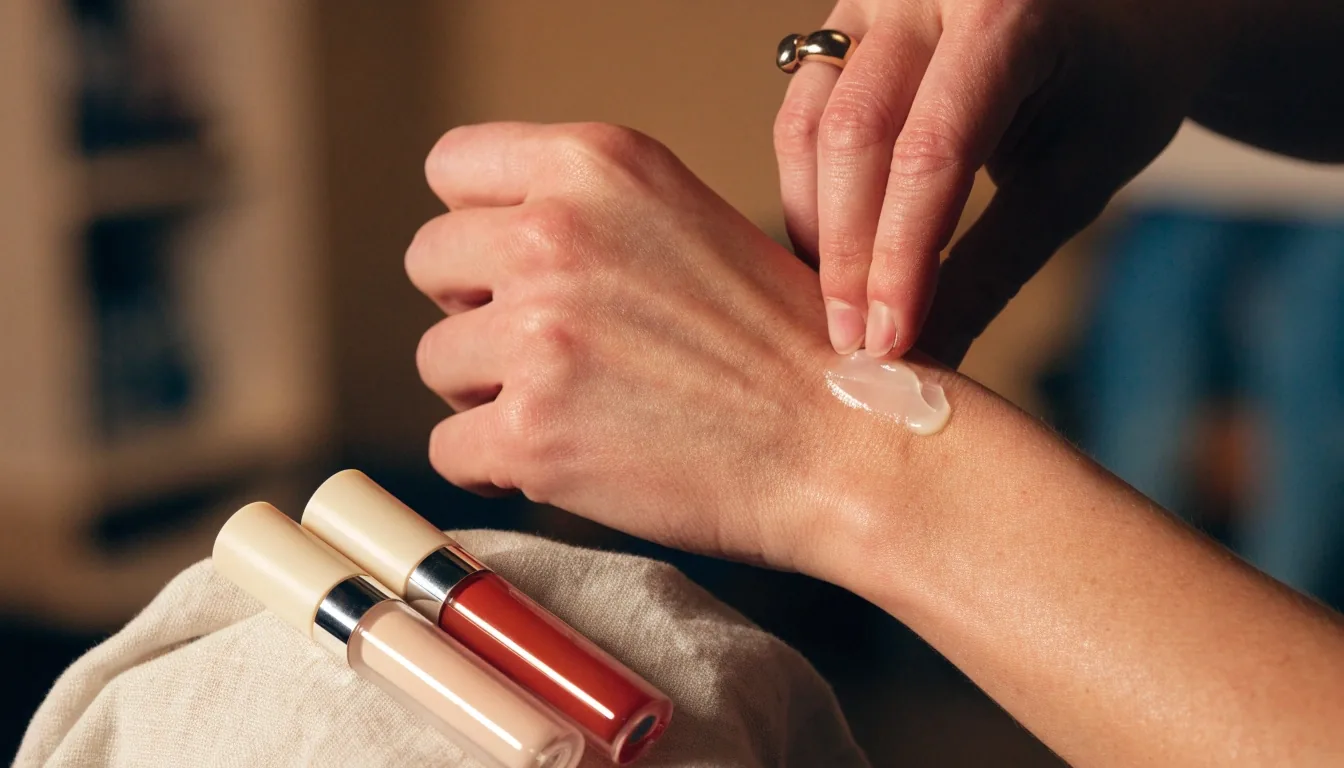
Tell us which cheek shades you already wear and what kind of finish you are after. We will point you toward a balm direction rather than a list of shades to guess from — and if you would rather compare in person, the journal office is open Monday to Friday, 9:00 AM to 6:00 PM.
NARS Cosmetics Journal · 482 Broadway, Suite 3B, New York, NY 10013 · +1-212-555-0198 · [email protected]